Surviving the Seasons: The HWBD Heating & Cooling Guide
Summers in Bangladesh can be dangerously hot and humid, while winter nights can bring sudden, cold drafts. Because hamsters cannot sweat or easily regulate their body heat, extreme temperatures can quickly lead to fatal heatstroke or a dangerous hibernation-like state called torpor. Here is how to keep your hamster’s enclosure at the perfect, safe temperature all year round.
Beat the Heat: Crucial Summer Care.
Hamsters cannot sweat. In our climate, temperatures above 25°C can quickly lead to fatal heatstroke. Learn how to safely manage your enclosure’s climate and protect your tiny friend during the hottest months.
Recognizing the Danger Zone
In their natural habitat, hamsters escape the daytime heat by burrowing deep underground where the earth is cool. In a glass tank or plastic bin cage inside our homes, they are completely trapped.
If the room temperature exceeds 25°C to 28°C, your hamster is at severe risk of heatstroke. Watch for these emergency signs:
Lying completely flat on their belly (trying to absorb coolness from the floor).
Heavy, labored, or rapid breathing.
Extreme lethargy or unresponsiveness.
Stumbling or weakness when trying to walk.

Safe & Effective Cooling Methods
Terracotta & Ceramics (Matir Jinis)
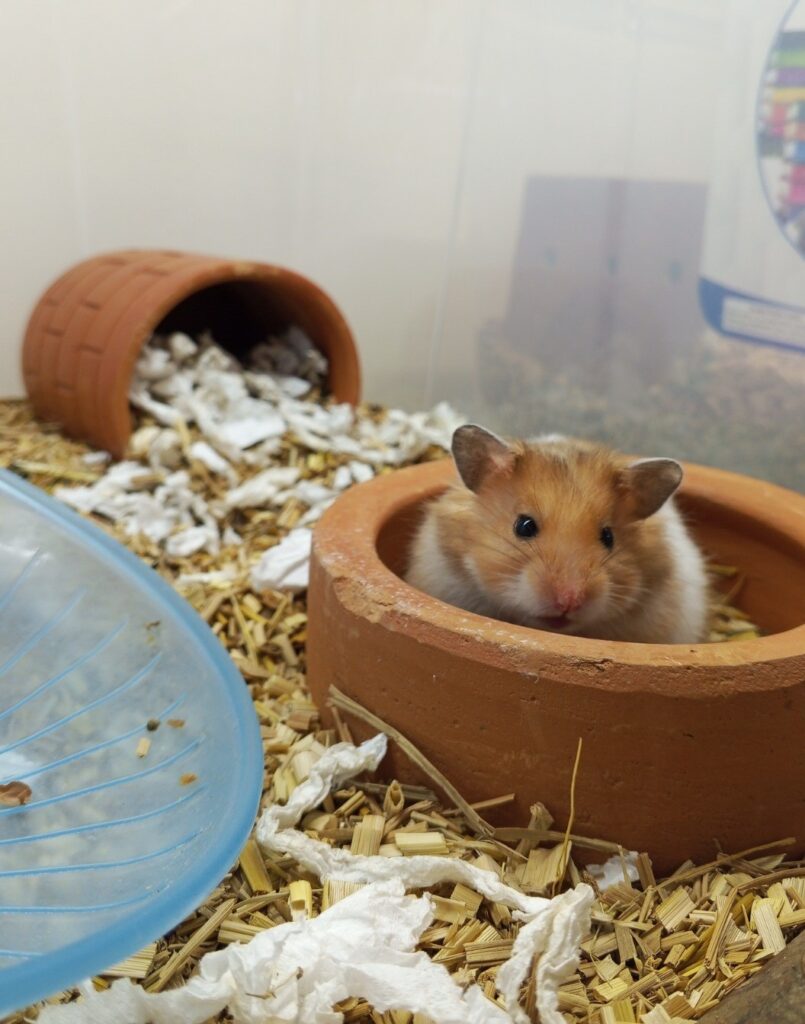
Terracotta pots, clay hides, and ceramic mugs stay naturally cooler than the surrounding air. Place clean, unglazed clay pots (matir hari) or ceramic tiles in the enclosure. Pro-tip: Pop a ceramic tile in your fridge for 10 minutes before placing it in the cage for an instant cooling pad!
The Frozen Bottle Trick
Freeze a plastic water bottle and wrap it in a thin towel. Place it on the outside of the glass tank or bin cage, pressing it against the side where the hamster sleeps. This creates a cool micro-climate inside without making the bedding wet.
Hydrating Fresh Foods
Offer small, daily amounts of water-rich, safe vegetables like cucumber or zucchini. This provides an extra source of safe hydration alongside their regular water bottle. Ensure you remove any uneaten fresh food within a few hours so it doesn’t spoil in the heat.
Safe Airflow (Fans & AC)
Air conditioning is the absolute best defense. If using a ceiling or stand fan, ensure it circulates the air in the room to lower the ambient temperature. Never point a fan directly at the hamster cage. Drafts can cause severe respiratory infections (URIs).
What NOT to Do (Dangerous Cooling Myths)
❌ Do not put ice cubes in their water bottle. Ice-cold water can shock their tiny systems and cause diarrhea or internal temperature crashes. Room-temperature, fresh water is best.
❌ Do not bathe your hamster. Never put a hamster in water to cool them down. Wet fur ruins their natural oils, causes immense stress, and can lead to fatal pneumonia.
❌ Do not use plastic hides in summer. Plastic traps heat like an oven. Swap plastic igloos for ceramic, clay, or wooden hides during the hotter months.
❌ Do not place the cage in direct sunlight. Keep enclosures away from windows. Ensure the room has thick curtains drawn during the peak afternoon sun.
What to do if you suspect Heatstroke
Heatstroke is a medical emergency. If your hamster is limp and breathing heavily:
Move them to the coolest, darkest room in the house immediately.
Place them on a cool (not freezing) ceramic tile or a towel draped over a cool surface.
Gently dab a single drop of room-temperature water on their lips using a cotton swab to encourage hydration. Do not force them to drink.
Seek veterinary help immediately.
Winter Care: Surviving the Chill & Preventing Torpor.
Understanding Torpor (Why Cold is Deadly)
When the ambient room temperature drops below 15°C, domestic hamsters are at high risk of entering torpor. This is a dangerous, pseudo-hibernation state where their heart rate, breathing, and metabolism drop drastically to conserve energy.
Many owners tragically mistake a hamster in torpor for a hamster that has passed away. Signs your hamster might be in torpor:
They feel cold to the touch.
They are stiff, but not completely rigid (rigor mortis).
You can see very faint, slow breathing (watch their whiskers or sides closely for several minutes).
They are completely unresponsive to touch or sound.
Safe Winter Heating Methods
The Best Insulation: Toilet Paper
The safest, cheapest, and most effective way to keep a hamster warm is giving them handfuls of plain, unscented, white toilet paper. Shred it into strips and pile it in their enclosure. They will eagerly carry it to their hide and build a thick, heavily insulated nest that traps their body heat perfectly.
Deep Bedding for Burrowing
In the wild, hamsters survive the cold by burrowing deep underground. Ensure your enclosure has a minimum of 6 to 8 inches (preferably 10+ inches) of safe paper or aspen/lohakath shavings bedding. The deeper the bedding, the better they can insulate themselves from the cold room air.
Safe Ambient Room Heating
If your room gets freezing at night, use an oil-filled radiator or a ceramic space heater to warm the entire room to a safe temperature (around 20°C – 23°C). Never point a space heater directly at the hamster cage, as this can quickly cause overheating or melt plastic bins.
What NOT to Do (Dangerous Winter Products)
- ❌ Do not buy “Hamster Fluff” or Cotton Bedding. Pet shops often sell fluffy cotton or synthetic fibers marketed as “winter warmers.” These are incredibly dangerous. The strong fibers can wrap around a hamster’s limbs, cutting off circulation, and cause fatal blockages if swallowed. Stick to safe toilet paper!
- ❌ Do not use heating pads or heat lamps. Reptile heat mats placed under a bin cage can melt the plastic, cause burns, or cook the hamster since they cannot easily escape the direct heat source. Heat lamps can damage their sensitive eyes.
- ❌ Do not place the cage next to drafty windows. Keep enclosures away from cold glass and drafty doors during the winter months.
What to do if your hamster is in Torpor
If you find your hamster cold and barely breathing, do not panic, and do not use extreme heat. Warming them up too fast can cause a fatal heart attack. You must warm them slowly.
Skin-to-Skin Contact: Hold the hamster gently against your bare chest or cup them in your warm hands. Your natural body heat is the safest way to slowly raise their temperature.
Warm Towel: Wrap a hot water bottle in several thick towels so it is only mildly warm to the touch, and let the hamster rest on the towels. Never place them directly on a hot surface.
Gentle Massage: Gently rub their body to stimulate blood flow.
Hydration: Once they start moving and open their eyes, offer a tiny drop of water or unflavored Pedialyte on a cotton swab.
Note: Recovery can take up to 60-90 minutes. Be patient. Once recovered, ensure the room is kept warmer to prevent a relapse.